
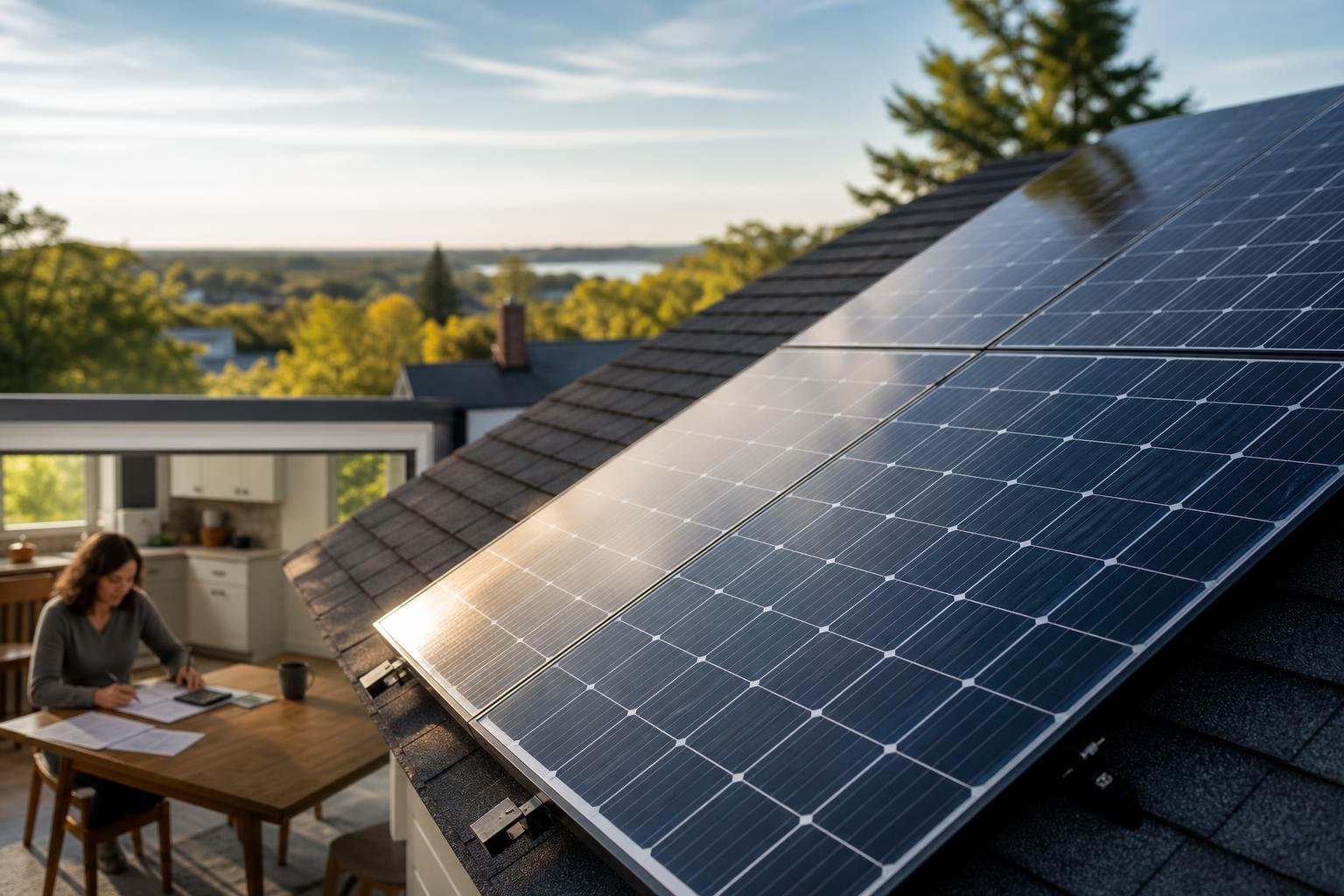
Solar Incentives in Worcester: What to Check Now
The federal Residential Clean Energy Credit ended for installations completed after December 31, 2025. The IRS states that property placed in service after that date is not eligible. Source: IRS: Residential Clean Energy Credit.; IRS: completion and prepayment guidance, question 7.
Confirm project eligibility with the relevant agency, utility and tax professional before relying on an estimate.
Federal credit has ended for new installations
The federal Residential Clean Energy Credit ended for installations completed after December 31, 2025. The IRS states that property placed in service after that date is not eligible. Source: IRS: Residential Clean Energy Credit.; IRS: completion and prepayment guidance, question 7.
Completion governs the deadline. Paying before the deadline does not qualify an installation completed later, under the IRS guidance on Public Law 119-21. Source: IRS: Residential Clean Energy Credit.; IRS: completion and prepayment guidance, question 7.
Massachusetts state energy credit
Massachusetts DOR describes an energy credit for spending on certain renewable source items and directs filers to include completed Schedule EC and Schedule CMS. Ask DOR or your tax professional whether your solar project qualifies and which tax-year forms to use. Source: Massachusetts DOR: energy credit and filing guidance.
Net metering: confirm with your utility
The Massachusetts DPU lists net metering rules under 220 CMR 18.00, including regulations effective December 20, 2024. Ask the utility named on your electric bill how the rules apply to your address and proposed system. Request written confirmation of eligibility, export-credit treatment and remaining charges. Source: Massachusetts DPU: net metering laws and regulations.
Mass Save financing: distinguish panels from batteries
Mass Save offers HEAT Loan financing for eligible energy-efficient upgrades. Its solar FAQ says only battery storage is eligible for financing in the solar context. Do not assume the loan will pay for solar panels; ask Mass Save about battery requirements and ask the lender about approval. Source: Mass Save: HEAT Loan financing.; Mass Save: solar financing FAQ.
MassCEC: an older loan program is closed
MassCEC records that the Mass Solar Loan program closed to new applications in December 2020. Do not treat that program as an available loan offer for a new project. Source: MassCEC: Mass Solar Loan program history.
Worcester Smart Energy Advice
The City offers a no-cost, 30-minute appointment with its Energy Advocate to discuss energy questions and access to energy-saving programs. Use the City?s Smart Energy Advice page to book or ask about the service. This is a City service, separate from our quote comparison. Source: City of Worcester: Smart Energy Advice.
Questions still requiring confirmation
SMART residential intake, capacity and eligibility have not been verified here. Ask the Massachusetts Department of Energy Resources whether your project can apply before including any SMART income in a proposal.
A property-tax exemption has not been verified here. Ask your local assessor and Massachusetts DOR whether any exemption applies to your property, ownership arrangement and project.
Questions for Any Financing Proposal
Ownership
Ask who owns the equipment and who would apply for any incentive.
Loan terms
Ask the lender for the full repayment schedule, fees and conditions in writing.
Proposal assumptions
Ask the installer to remove any unavailable credit from the proposal and identify assumptions still awaiting approval.
Records to Discuss With Your Adviser
Ask your tax professional which contracts, completion records, payment records and tax forms to retain. Ask your installer and utility for copies of approvals and the assumptions behind projected bill credits.
Solar Incentives FAQ
Can a new Worcester installation still claim the federal residential credit?+
No. The federal Residential Clean Energy Credit ended for installations completed after December 31, 2025. Prepayment does not qualify a later installation. Ask your tax professional about any earlier completed project.
Source: IRS: Residential Clean Energy Credit.; IRS: completion and prepayment guidance, question 7.What Massachusetts tax paperwork should I review?+
Massachusetts DOR directs energy-credit filers to include completed Schedule EC and Schedule CMS. Ask DOR or your tax professional whether your project qualifies and which forms apply to your tax year.
Source: Massachusetts DOR: energy credit and filing guidance.Can the Mass Save HEAT Loan finance my solar panels?+
Mass Save?s solar FAQ says only battery storage is eligible for financing in the solar context. Ask Mass Save about battery eligibility and the lender about approval; do not assume panels are covered.
Source: Mass Save: solar financing FAQ.; Mass Save: HEAT Loan financing.How should I check net metering and my future electric bill?+
Use the DPU?s 220 CMR 18.00 net metering guidance as a starting point. Ask the utility on your bill to confirm your system?s eligibility, export-credit treatment and charges that would remain. Do not rely on a promise that solar will eliminate your bill.
Source: Massachusetts DPU: net metering laws and regulations.Is the Mass Solar Loan program accepting new applications?+
No. MassCEC records that the program closed to new applications in December 2020. Ask a prospective lender to identify its current product and terms rather than relying on that older program name.
Source: MassCEC: Mass Solar Loan program history.Where can I ask local energy questions in Worcester?+
The City?s Smart Energy Advice service offers a no-cost, 30-minute appointment with an Energy Advocate about energy questions and access to energy-saving programs. Visit the City page to arrange an appointment.
Source: City of Worcester: Smart Energy Advice.Before requesting quotes, review how the solar process works. For questions about our comparison service, contact us.
Ready to Compare Solar Quotes?
Request a free assessment and quote comparison, then ask each provider to explain every incentive assumption. Solar equipment and installation are paid products and services.